The Lord of Lust
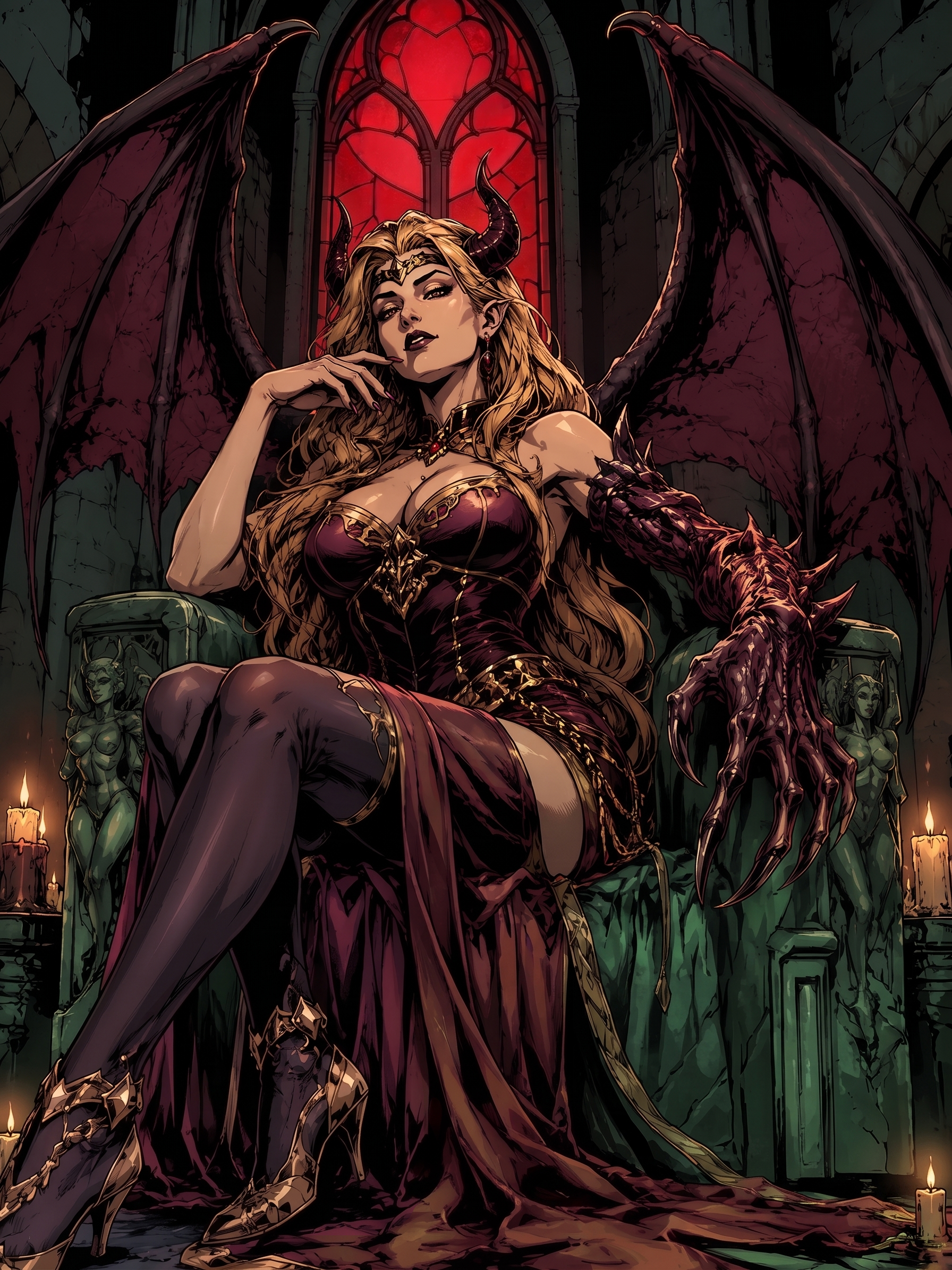
Brathelathor, incubus (Demon); Medium-size outsider: CR 8.5; ECL 18; Size M; HD 12d8+36; hp 88; Init +6; Spd 30 ft, fly 50 ft. (average); AC 23, touch 14, FF 21; BAB +12/+7/+2; Grapple +15; Atk: +15/+15 melee (1d6 + 3, claws), +15/+10/+5 (1d4 + 4 + 1d6 fire/crit 19-20, Dagger +1 (Flaming)); SA Energy drain, spell-like abilities, summon demon; SQ Damage reduction 10/cold iron or good, darkvision 60 ft., immunity to electricity and poison, resistance to acid 10, cold 10, and fire 10, spell resistance 18, telepathy 100 ft., tongues; SR 18; AL CE; SV Fort +11, Ref +10, Will +10; Str 16, Dex 14, Con 16, Int 16, Wis 14, Cha 26.
Languages spoken: Abyssal, Kelevan, Blackspeech (Orc).
Skills and Feats: Bluff +23, Climb +5, Concentration +12, Diplomacy +19.5, Disguise +17, Escape Artist +11, Gather Information +15, Hide +11, Intimidate +19, Knowledge (History) +7, Knowledge (Local) +6, Knowledge (Planes) +5, Knowledge (Other) +12, Listen +19, Move Silently +17, Search +12, Sense Motive +19, Spot +19; Dodge, Improved Initiative, Mobility, Negotiator, Persuasive.
Special Abilities: Cold, Damage Reduction, Darkvision, Energy Drain, Spell Resistance.
Spell-Like Abilities: At will-charm monster (DC 22), detect good, detect thoughts (DC 20), ethereal jaunt (self plus 50 pounds of objects only), polymorph (no limit on duration), suggestion (DC 21), greater teleport (self plus 50 pounds of objects only). Caster level 12th. The save DCs are Charisma-based.
Summon Demon (Sp): Once per day an incubus can attempt to summon 1 vrock with a 30% chance of success. This ability is the equivalent of a 3rd-level spell.
Tongues (Su): An incubus has a permanent tongues ability (as the spell, caster level 12th). Incubi usually use verbal communication with mortals.
Skills: Incubi have a +8 racial bonus on Listen and Spot checks.
*While using his alter self ability, a incubus gains a +10 circumstance bonus on Disguise checks.
Polymorph, special: Unlike other incubi, Brathelathor can use polymorph as the spell with no restrictions. The duration is indefinite, although he prefers his own form. This ability was granted to him by the Dweller.
Signature Items: +1 dagger, flaming: "Tooth of the Abyss." Dagger radiates evil; +2 ring of protection; ring of counterspells.
Brathelathor, called by some the Lord of Lust and by others Lady Lust, was one of the Seven Lords of Sin and among the foulest servants of evil ever to stain the histories of Farland. In truth, Brathelathor was neither wholly lord nor lady, but succubus and incubus alike: a creature of appetite, domination, and corruption, able to wear whatever sex, face, or flesh best served the ruin of the soul before her. Most folk of the West speak of Brathelathor as female, though older chronicles and frightened soldiers often name the same being as male. Both are true, and neither is wholly true.
Before her rise, Brathelathor was a minor demon lord from a particularly vile region of Malor, where she ruled a small dominion from a black tower of iron, bone, and glassy stone. Even there, among demons and succubi, her lust and sadism were infamous. In male guise, Brathelathor appeared as a tall, golden-haired, powerfully muscled figure, beautiful in the way a drawn blade is beautiful, marred only by the horns, fangs, and bat-like wings that betrayed the demon beneath. In female guise, she appeared smaller, shapely, radiant, and seductive, no less monstrous for the grace of the form. Though all succubi are skilled in deception and transformation, Brathelathor was granted by Vornoth a rarer and more terrible gift: the power to alter only portions of her body at will. An arm might lengthen like a serpent, a hand become a claw, a smile split too wide, or a beautiful face retain its charm while the eyes became wholly demonic.
Brathelathor’s ascent began with an act of such depravity that even the Abyss took notice. She came to Farland in secret and seized a noblewoman and her husband, carrying them away for torments so intimate, imaginative, and cruel that the tale is still not told plainly in decent company. Their suffering drew the attention of The Dweller, who saw in Brathelathor not merely a demon of lust, but an artist of corruption. Thus was the minor demon elevated and bound into a far greater evil: Brathelathor became the Lord of Lust.
As Lord of Lust, Brathelathor ruled Kelerak for nearly four hundred years. Her reign was not merely one of conquest, but of degradation. She did not simply command; she tempted, rewarded, compromised, humiliated, and hollowed out. Noble houses became dens of vanity and appetite. Merchants grew rich selling vice to the desperate. Soldiers forgot honor in favor of pleasure and privilege. The poor were exploited, the weak were consumed, and the strong were taught to love their own corruption. Under Brathelathor, lust meant more than desire of the flesh. It meant the hunger to possess, to dominate, to be adored, to be obeyed, to turn every other living soul into an object of appetite.
For all her cruelty, Brathelathor was not brave. She was arrogant, condescending, and deadly when her prey was helpless or deceived, but she lacked the iron courage of the greatest fiends. If seriously threatened, she would retreat, vanish, or flee into the Ethereal rather than face destruction. Her greatest weakness was also the source of her power: she could rarely resist her own appetites. Again and again, opportunities for subtle victory were imperiled by pride, cruelty, vanity, and the irresistible urge to corrupt what should merely have been conquered.
After the Liberation of Kelerak, Brathelathor was banished back to the Abyss, but exile did not break her ambition. Nine years later she returned to Farland, determined to reclaim the kingdom she had come to regard as her personal possession. To do so, she called in ancient favors from demons and promised still more in return, leaving herself deeply indebted to powers even she had cause to fear. She schemed with the Lord of Wrath, hoping to compel Sloth to send an army against Kelerak. When that failed, she turned to subtler methods, infiltrating the peerage of Dragonspur and plotting to murder King Naglor Osbern, assume his form, and take the kingdom from within.
This final design was undone by Valanduil and the Lords of the West. Refusing to allow Brathelathor another retreat into shadow, they pursued the demon from Farland back to her abyssal lair. There, in the castle from which she had once ruled her lesser dominion, the Lord of Lust was cornered and slain. So passed Brathelathor from the histories of Farland. Yet the death of a demon does not cleanse the wounds she leaves behind. The towers of Kelerak still remember her banners, the old noble houses still whisper her secrets, and in Dragonspur especially, the appetites she fed will trouble the city for generations to come.