
Skip

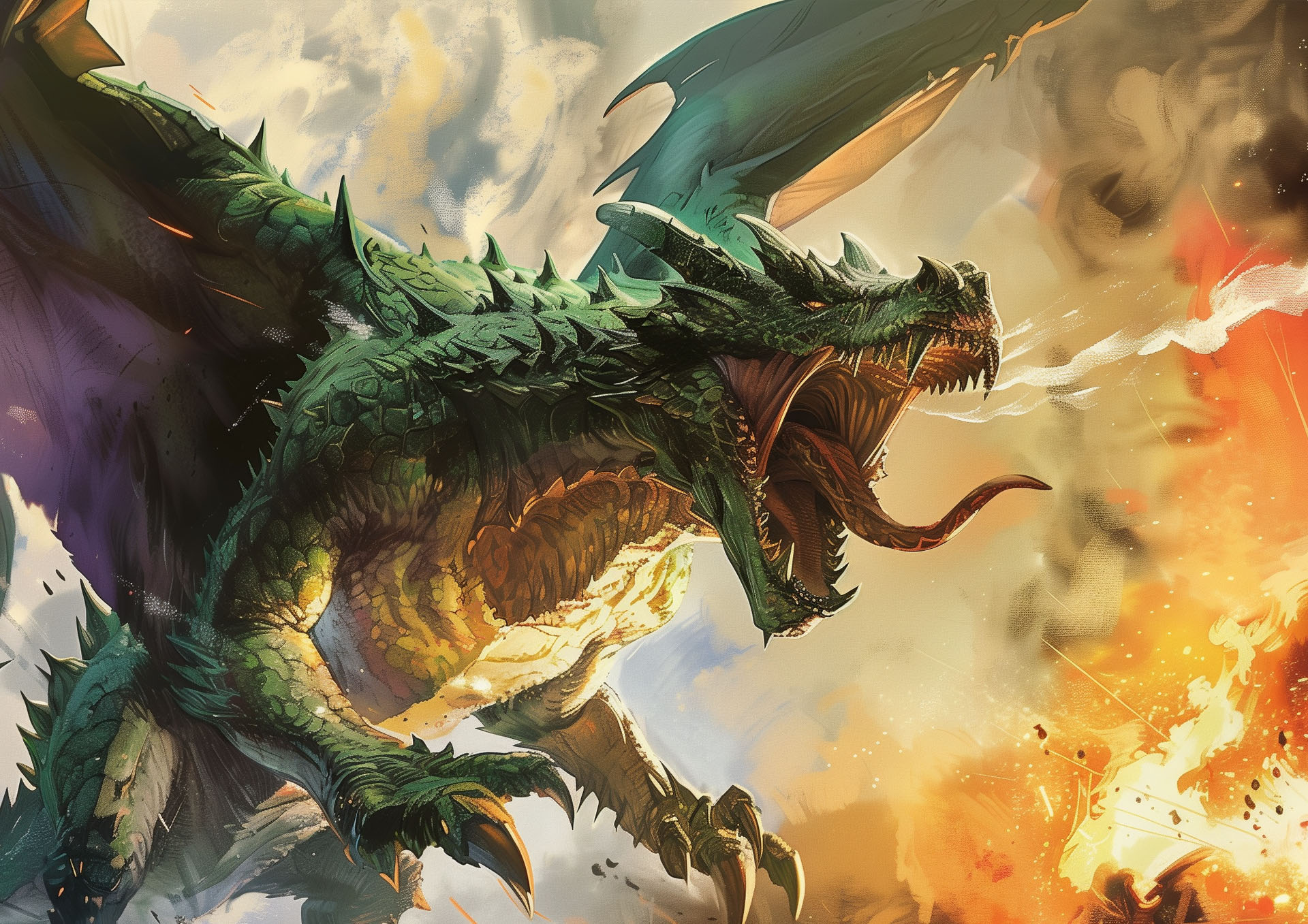
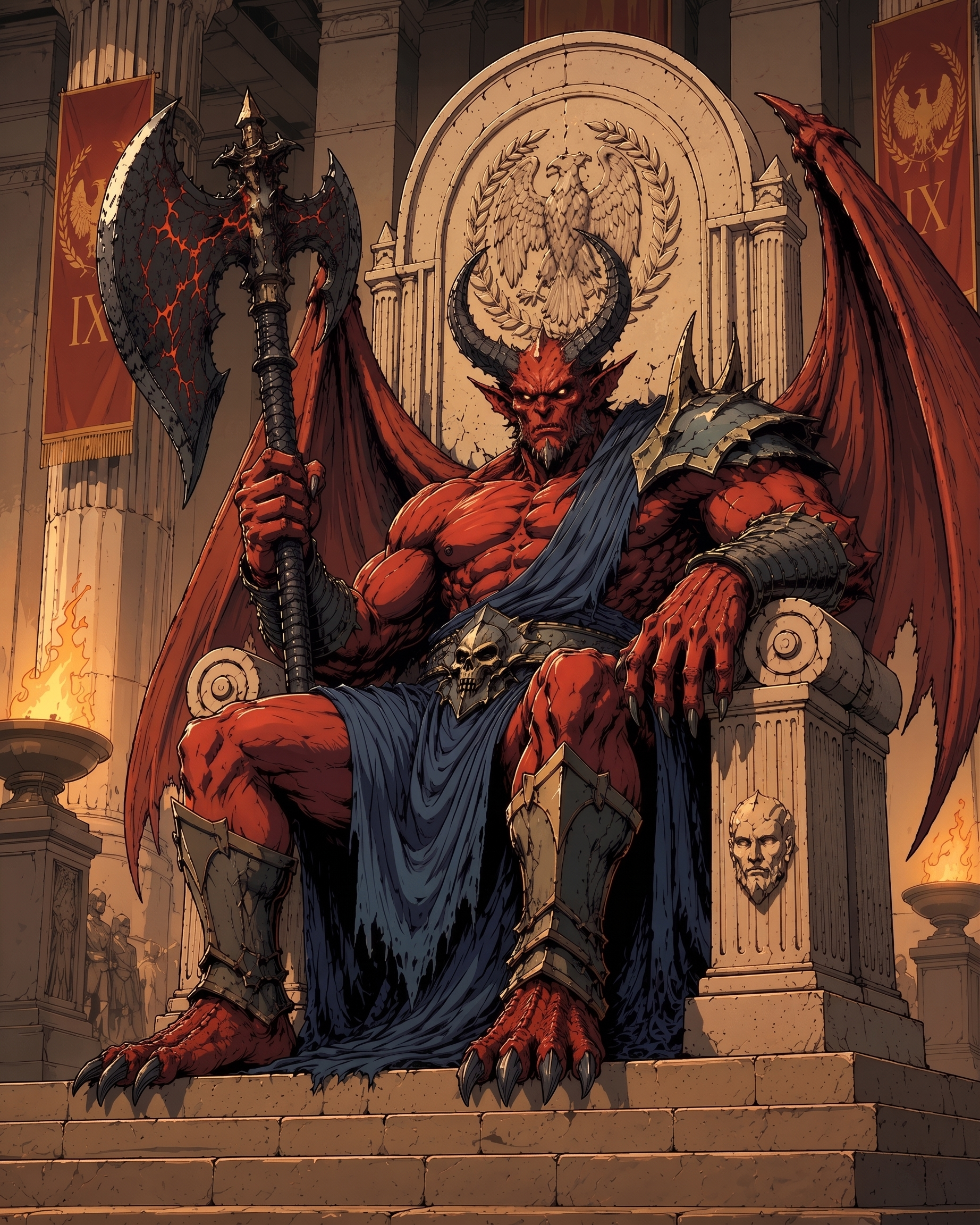
The story of the Lord of Wrath begins in the depths of the lower planes, paradoxically in Barathus and Malor at once. In an echo of Vornoth's betrayal of the other evil gods when he created the Book of Seven, the origin of the Captain of the Deadly Lords began when evil turned upon itself, each side seeking its own advantage.
Two mighty warlords, the Pit Fiend Nabarus and the Balor Bakahul, clashed in the Astral River, hurling their devilish and demonic armies against one another. Their forces took advantage of the weakened boundaries between the lower planes, boundaries made less certain by Vornoth, the Walker-in-Darkness, who traversed the planes of evil at will. Both fiends hoped that the destruction of such a powerful adversary would win them prestige in the eyes of the greater demons and devils above them. Yet the two were so evenly matched that neither could gain the upper hand. Their armies decimated, each returned to his infernal fortress to nurse his wounded pride: Nabarus stewing in cold resentment, Bakahul raging at the stalemate.
In his black-spired, lava-moated castle, the wily devil Nabarus hatched a plot to rise within the strict hierarchies of Hell. He began researching a demonic ritual that would allow him to absorb the power of Bakahul, increasing both his personal might and his infernal prestige. For several years he made little progress, and it seemed that such a rite might be impossible.
Then, in his search for forbidden knowledge, Nabarus contacted a powerful evil from another plane: the Dweller in the Wintervale herself. After extracting from him a promise of future service, the Dweller supplied the Pit Fiend with magical phrases drawn from the Book of Seven, the very key needed to unlock the ritual.
Nabarus then lured Bakahul to the Astral River under a flag of truce. There, in an act of pure betrayal, he uttered the magical words. In a blinding flash, he began to absorb the power of the Balor. Taken by surprise and overcome by fury, Bakahul cried out for aid to the darkest power of the lower planes: Vornoth himself.
Ordinarily, the Walker-in-Darkness would not have cared for the plight of a single demon, even one as mighty as Bakahul. In this instance, however, the Lord of Evil saw the chance to forge a useful tool. He answered the Balor's call, preserving Bakahul's consciousness even as the demon's body was destroyed forever.
Thus Nabarus and Bakahul were merged.
The Pit Fiend soon discovered that his victory had carried a terrible price. In moments of stress, rage, or injury, the personality of Bakahul struggled to the surface, fighting to seize control of Nabarus' body and undo the devil's designs. Nabarus had gained the Balor's power, but he had also made his enemy immortal within himself.
Filled with anger at this unexpected curse, Nabarus set aside his ambitions of rising through the hellish hierarchy and turned his efforts toward removing Bakahul from his being. Yet these efforts too were thwarted, for the Dweller in the Wintervale soon called in her favor. She summoned the Pit Fiend to Núrion to serve as the Captain of the Lords of Sin. Using the Book of Seven, she imbued him with the Dark Will, and, bound by his promise, Nabarus angrily agreed to become the Lord of Wrath. His dream of becoming an Overlord of Hell slipped away, perhaps forever. He led an assault on the greatest realm on the continent: the Kingdom of Farland. And he conquered it and set himself up to rule from the Far City.
Here, however, Vornoth's deeper plan came to fruition. The dark god knew that the Dweller had long chafed under his control and sought some means of escaping her sentence of doom. He knew the fallen elf would betray him if she believed she could do so safely. Therefore Vornoth spoke to the trapped consciousness of Bakahul, revealing to the raging and nearly insane demon that he owed his continued existence to the Walker-in-Darkness and that his present torment was the fault of the Dweller in the Vale.
Vornoth charged Bakahul with watching the Dweller's movements and reporting her machinations back to him. This was necessary because direct divine intervention on Núrion had been forbidden by the Council of the Gods. Because of this interdiction, Vornoth's awareness of events on Núrion was clouded, and the Dweller had become especially adept at hiding from his sight when she wished. Bakahul, hating the Dweller and seeing Vornoth as his salvation, agreed to spy upon his master.
Thus the Lord of Wrath contains not one fury, but two.
Nabarus' wrath is cold, disciplined, and calculating. Bound by oath to serve the Dweller, he seethes at the loss of his true ambition. The thought that he might once have become an Overlord of Hell pierces his heart like an icicle. His anger does not flare wildly; it hardens, sharpens, and waits.
Bakahul's wrath is altogether different. His anger is fiery, chaotic, and nearly uncontrollable. He burns with hatred for Nabarus, who stole his body; for the Dweller, whose schemes made his imprisonment possible; and for nearly every creature in existence. Only Vornoth is spared his hatred, for Bakahul regards the Walker-in-Darkness as the preserver of his soul and the author of his eventual revenge. When Bakahul gains control of Nabarus' body, he is sometimes able to master his fury long enough to use mighty magics and report to Vornoth on the doings of the Dweller. Yet this discipline never lasts for long.
In war, Nabarus is cold, guarded, and strategic. He surrounds himself with legions of hobgoblin troops and with the elite force known as the Crimson Lion Guard, preferring to let his soldiers bleed before he commits himself directly. He is no coward, but he is a devil: cautious, hierarchical, and careful with his power.
If Nabarus is wounded or driven to great anger, Bakahul strains against the prison of their shared flesh. The more injured or enraged the Pit Fiend becomes, the harder Bakahul is to resist. When the Balor at last seizes control, the Lord of Wrath changes utterly. He becomes more reckless, more direct, and far less tactical. Bakahul remains cunning, but his cunning is always threatened by the fire of his rage. Sooner or later, he gives himself over to fury and wades into combat with his fearsome magical greataxe.
This is why Nabarus-Bakahul is the truest embodiment of Wrath. He is not merely angry. He is anger divided against itself: cold vengeance chained to hot fury, calculation fused with frenzy, hatred made into a single monstrous will. In him, wrath is both the patience to plot for centuries and the impulse to tear the world apart in a single burning instant.
Large Fiend (Devil), lawful evil
AC 22 Initiative +14Hit Points 525 (35d10 + 315)
Speed 30 ft., fly 60 ft.
Skills Intimidate +15, Perception +12, Persuasion +15
Resistances Cold, Lightning
Immunities Fire, Poison; Poisoned
Senses Truesight 120 ft., Passive Perception 22
Languages Dark Speech, Farlandish, telepathy 120 ft.
Challenge 24 (XP 62,000 or 75,000 in lair; PB +8)
Fear Aura. The Lord of Wrath emanates an aura in a 20-foot Emanation while it doesn't have the Incapacitated condition. Wisdom Saving Throw: DC 23, any enemy that starts its turn in the aura. Failure: The target has the Frightened condition until the start of its next turn. Success: The target is immune to the Lord of Wrath's aura for 24 hours.
Legendary Resistance (4/Day, or 5/Day in Lair but Bakahul's uses count against Nabarus' uses). If the Lord of Wrath fails a saving throw, he can choose to succeed instead.
Magic Resistance. The Lord of Wrath has Advantage on saving throws against spells and other magical effects.
Multiattack. The Lord of Wrath makes one Bite attack, two Devilish Claw attacks, and one Axe attack.
Bite. Melee Attack Roll: +16 to hit, reach 10 ft., one target. Hit: 27 (6d6 + 8) Piercing damage. If the target is a creature, it must make the following saving throw. Constitution Saving Throw: DC 23. Failure: The target has the Poisoned condition. While Poisoned, the target can't regain Hit Points and takes 27 (8d6) Poison damage at the start of each of its turns, and it repeats the save at the end of each of its turns, ending the effect on itself on a success. After 1 minute, it succeeds automatically.
Devilish Claw. Melee Attack Roll: +16 to hit, reach 10 ft., one target.Hit: 34 (6d8 + 8) Necrotic damage.
Axe. Melee Attack Roll: +16 to hit, reach 10 ft., one target.Hit: 25 (5d6 + 8) Force damage plus 27 (8d6) Fire damage.
Hellfire Spellcasting (Recharge 4-6). The Lord of Wrath casts Fireball (level 7 version) twice, requiring no Material components and using Charisma as the spellcasting ability (spell save DC 23). It can replace one Fireball with Hold Monster (level 7 version) or Wall of Fire.
Large Fiend (Demon), chaotic evil
AC 22 Initiative +14Hit Points 525 (35d10 + 315)
Speed 40 ft., Fly 80 ft.
Skills Intimidate +15, Perception +11
Resistances Cold, Lightning
Immunities Charmed, Frightened, Fire, Poison, Poisoned
Senses Truesight 120 ft., Passive Perception 21
Languages Dark Speech, Farlandish, telepathy 120 ft.
Challenge 24 (62,000 or 75,000 in lair XP; PB +8)
Death Throes. The Lord of Wrath explodes when he dies. Dexterity Saving Throw: DC 23, each creature in a 30-foot Emanation originating from the Lord of Wrath. Failure: 37 (12d6) Fire damage plus 37 (12d6) Force damage. Success: Half damage.
Fire Aura. At the end of each of the Lord of Wrath's turns, each creature in a 5-foot Emanation originating from the Lord of Wrath takes 21 (5d8) Fire damage.
Legendary Resistance (4/Day, or 5/Day in Lair but Nabarus' uses count against Bakahul's uses). If the Lord of Wrath fails a saving throw, he can choose to succeed instead.
Magic Resistance. The Lord of Wrath has Advantage on saving throws against spells and other magical effects.
Multiattack. The Lord of Wrath makes one Flame Whip attack and one Axe attack.
Flame Whip. Melee Attack Roll: +16 to hit, reach 30 ft., one target. Hit: 30 (7d6 + 8) Force damage plus 22 (7d6) Fire damage. If the target is a Huge or smaller creature, the Lord of Wrath pulls the target up to 25 feet straight toward itself. The target has the Prone condition.
Axe. Melee Attack Roll: +16 to hit, reach 10 ft., one target.Hit: 25 (4d8 + 8) Force damage plus 26 (5d10) Lightning damage. The target can't take Reactions until the start of the Lord of Wrath's next turn.
Teleport. The Lord of Wrath teleports himself or a willing creature within 10 feet of him up to 60 feet to an unoccupied space the Lord of Wrath can see.
Legendary Action Uses: 3 (4 in Lair). Immediately after another creature's turn, the Lord of Wrath can expend a use to take one of the following actions. He regains all expended uses at the start of each of his turns.
Enrage. A random creature that is an enemy of the Lord of Wrath within sight of the Lord of Wrath must succeed at a DC 23 Wisdom saving throw or become enraged. On its next turn, the creature uses its action to make a melee or ranged attack against a randomly determined ally within its reach or range. If there is no ally within its reach or range, the creature does nothing on its turn except fume.
Axe. The Lord of Wrath makes an axe attack. The Lord of Wrath can’t use this action again until the start of his next turn.
Hellish Fury. The Lord of Wrath makes a Devilish Claw or Flame Whip Attack. The Lord of Wrath can’t use this action again until the start of his next turn.
Hellfire Vulnerability. One creature within 60 feet of the Lord of Wrath has vulnerability to fire damage until the end of their next turn. That creature cannot be affected by Hellfire Vulnerability again until 3 rounds have passed.
Hell’s Barrier. A wall of fire springs into existence on a solid surface within 120 feet of the Lord of Wrath. The wall is up to 60 feet long, 10 feet high, and 5 feet thick, and it blocks line of sight. When the wall appears or when a creature attempts to pass through it or is in its area, it must make a save. Dexterity Saving Throw: DC 18, each creature in the area of the Wall of Fire. Failure: 18 (4d8) fire damage and the creature is pushed 5 feet out of the wall's space, appearing on whichever side of the wall it wants. Success: Half damage. Creatures can pass through the wall, but it is difficult terrain. The wall extinguishes when the Lord of Wrath uses this legendary action again or when he dies. The Lord of Wrath can’t use this action again until the start of his next turn.
The Lord of Wrath lairs in the Flamespire, the highest tower in the Palace of Wrath in the Far City. Creatures that dwell within a mile of the Flamespire are short-tempered, irritable, and given to angry outbursts and even unnecessary violence. The Palace is guarded by hobgoblin legions as well as the dreaded Crimson Lion Guard.